
Artificial Intelligence (AI) is no longer a futuristic concept; it’s a core component of modern business operations. Yet, the terminology and types of AI solutions can be confusing. Terms like AI Agents, agentic AI, and chatbots are often used interchangeably, but they serve distinct purposes. Understanding the difference is critical for businesses, whether you operate in India or on a global scale. With the rise of generative AI trends reshaping how enterprises automate, scale, and innovate, the need for clarity becomes more important than ever. Today, organizations integrating artificial intelligence in business are no longer asking if they need AI; they’re asking which type of AI will help them become more efficient, competitive, and future-ready.
In this blog, we’ll explain the fundamental differences between AI Agents and Agentic AI, explore their strategic implications, examine market trends, and discuss how companies like Ariel leverage these technologies to deliver meaningful business outcomes. By the end, you’ll be able to decide which approach aligns with your business needs and future goals, especially in a world where AI for business intelligence is now a strategic advantage, not an optional upgrade.
What Are AI Agents?
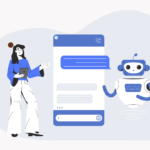
An AI Agent is a system that performs reactive, task-specific actions. It responds to user inputs or queries rather than initiating actions independently. AI Agents are commonly deployed in customer service, e-commerce support, and internal task automation, providing consistent, efficient responses within a defined scope. As generative AI trends mature, AI Agents are evolving too, becoming more conversational, faster, and better integrated, but still grounded in reactive operations.
Key Attributes of AI Agents
- User-initiated interactions: AI Agents respond to prompts or queries from users.
- Task-specific logic: These systems operate within well-defined rules or pre-trained behavior.
- Limited autonomy: AI Agents cannot act independently beyond their designed scope.
- Simple to moderate complexity: Best suited for predictable, repeatable tasks like FAQs, product recommendations, and scheduling.
Common Use Cases
- Customer support chatbots: Resolve user queries and troubleshoot issues.
- E-commerce assistants: Recommend products, provide information, and help users navigate platforms.
- Virtual assistants: Handle scheduling, reminders, and simple internal workflows.
- Email routing or ticket classification: Automate repetitive administrative tasks.
At Ariel, for example, a ChatGPT Mini 5.1-based chatbot was deployed for an e-commerce client. It assisted users with troubleshooting, product recommendations, and general queries. This reactive, user-driven approach is a classic example of an AI Agent in action, and one that many companies adopt as their first step into artificial intelligence in business
What Is Agentic AI?
Agentic AI represents the next level of intelligence, systems that are proactive, autonomous, and goal-oriented. Unlike AI Agents, agentic AI can plan, execute, and adapt to achieve objectives without continuous human input. In the landscape of generative AI trends, agentic systems are seen as the next major leap toward enterprise-level automation.
Key Attributes of Agentic AI
- Goal-driven autonomy: The system can independently decide what actions to take based on objectives or contextual understanding.
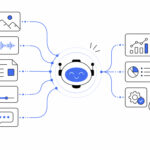
- Multi-step workflows: Capable of breaking down complex tasks and coordinating actions across multiple systems.
- Context awareness and memory: Maintains state, recalls prior interactions, and uses this information to make informed decisions.
- Integration across systems: Works seamlessly with databases, APIs, internal tools, and workflows for complex operations.
Typical Use Cases
- Proactive workflow automation: Automatically generating reports, monitoring metrics, and triggering tasks when necessary.
- Enterprise-level orchestration: Coordinating processes across HR, finance, operations, and customer service.
- Intelligent internal assistants: Assisting project management, analytics, or compliance tasks.
- Adaptive decision-making: Responding to dynamic environments or unexpected changes without manual intervention.
For Ariel, Agentic AI solutions help clients generate reports, implement workflow changes, and manage tasks autonomously, providing businesses with scalable and intelligent automation. This is especially powerful for organizations looking to strengthen AI for business intelligence without relying heavily on manual monitoring.
Core Differences, AI Agents vs Agentic AI
| Dimension | AI Agent | Agentic AI |
|---|---|---|
| Action Initiation | User-driven | Autonomous, goal-driven |
| Scope of Task | Narrow, well-defined | Broad, multi-step, dynamic |
| Adaptability | Limited; requires updates | Learns, adapts, re-plans autonomously |
| Complexity & Integration | Simple to moderate | High; integrates multiple systems |
| Typical Use Cases | Chatbots, FAQs, product recommendations | Workflow automation, report generation, enterprise orchestration |
| Human Oversight | Necessary for exceptions | Minimal for routine tasks; oversight recommended for critical actions |
| Business Impact | Efficiency and support | Operational optimization and strategic transformation |
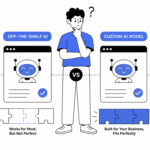
In essence, AI Agents are efficient helpers for predictable tasks, while Agentic AI is a proactive system capable of intelligent decision-making and complex task execution. As generative AI trends keep evolving, these two branches of AI will continue diverging while complementing each other in business ecosystems, especially for organizations scaling artificial intelligence in business infrastructure.
Market Trends in 2025
As of late 2025, AI adoption is accelerating globally and in India:
- Enterprise adoption: Over 70% of enterprises in India are implementing AI-driven automation in customer service, finance, and operations. Globally, adoption rates are even higher, with North America and Europe leading in agentic AI deployment.
- Generative AI growth: Traffic to AI-enabled services is increasing rapidly, especially in e-commerce, fintech, and logistics, as businesses seek to enhance customer experiences.
- Shift toward autonomous systems: Companies are moving from reactive AI Agents to proactive Agentic AI to improve efficiency, reduce operational overhead, and gain competitive advantages.
- Emerging industries: Healthcare, supply chain, retail, and banking are seeing the fastest adoption of intelligent automation.
These market signals align with how artificial intelligence in business continues to mature. Organizations now invest in layered automation strategies, using AI Agents for customer-facing tasks and Agentic AI for deep operational workflows. This shift is also influencing how companies implement AI for business intelligence, leveraging automation to analyze patterns, detect inefficiencies, and take proactive actions.
Implications for Businesses
- Customer expectations: Users now expect instant support and personalized experiences. AI Agents can meet these demands at scale.
- Operational efficiency: Agentic AI enables businesses to automate complex workflows, freeing employees for higher-value tasks.
- Competitive advantage: Early adopters of agentic AI gain a head start in process efficiency, decision-making speed, and scalability.
- Hybrid adoption: Many organizations adopt a layered approach, starting with AI Agents for reactive tasks and evolving toward agentic AI for workflow orchestration.
These shifts are reinforced by generative AI trends that push businesses toward automation-first thinking. Companies leveraging AI for business intelligence not only make faster decisions but also build systems that take action without waiting for human initiation.
Strategic Implications for Businesses
Understanding the difference between AI Agents and Agentic AI allows businesses to plan smarter AI strategies.
Decision-Making Framework
- Assess current needs: Do you need reactive support (AI Agent) or proactive automation (Agentic AI)?
- Evaluate data readiness: Agentic AI requires high-quality, integrated data. AI Agents can work with smaller datasets.
- Determine complexity tolerance: Complex workflows benefit more from agentic AI, while simple support needs are ideal for AI Agents.
- Plan for scale: If your business is growing rapidly, starting with agentic AI or a hybrid system ensures future readiness.
- Consider risk and oversight: Agentic AI requires monitoring and governance for sensitive operations.
By aligning this decision-making process with the latest generative AI trends, companies can build robust pipelines where artificial intelligence in business becomes a long-term accelerator rather than a patchwork of isolated tools.
Key Takeaways
- AI Agents: Perfect for predictable, user-facing tasks. They are cost-effective, easy to deploy, and provide consistent support.
- Agentic AI: Best suited for autonomous, complex, multi-step workflows. Enables operational optimization, strategic decision-making, and scalable automation.
- Hybrid adoption: Combining both can deliver maximum value, reactive support, and proactive automation coexisting efficiently.
This hybrid approach is especially effective for organizations implementing AI for business intelligence, allowing businesses to collect insights (via AI Agents) and act on them autonomously (via Agentic AI).
Ariel’s Approach
Ariel is uniquely positioned to help businesses adopt AI solutions effectively:
AI Agent Implementation
- E-commerce chatbots: Providing support, recommendations, and guidance to users.
- Lead generation and qualification: Capturing potential clients and automating initial engagement.
- SME-focused solutions: Quick-to-deploy, cost-effective automation tools for smaller businesses.
Agentic AI Implementation
- Enterprise workflow automation: Automating reporting, analytics, and operational tasks.
- Cross-system orchestration: Seamlessly connecting CRM, inventory, analytics, and other platforms.
- Proactive intelligence: Monitoring operations, predicting issues, and executing tasks autonomously.
With generative AI trends accelerating adoption, Ariel helps businesses combine AI Agents and Agentic AI seamlessly, especially valuable for companies in India and overseas modernizing their artificial intelligence in business ecosystem.
Future Outlook for 2026 and Beyond
Looking ahead, businesses can expect:
- Hybrid AI systems: Integrating AI Agents and Agentic AI for maximum efficiency.
- Greater personalization: AI-driven systems provide more tailored recommendations and proactive solutions.
- Advanced analytics integration: AI Agents feeding insights to Agentic AI for smarter decision-making.
- Ethical automation frameworks: Companies will focus on responsible AI, balancing autonomy with oversight, compliance, and governance.
As AI for business intelligence evolves, businesses adopting AI early will be better positioned for agility, efficiency, and customer satisfaction as AI becomes central to operations.
Conclusion

AI Agents and Agentic AI are distinct but complementary tools:
- AI Agents: Ideal for reactive, predictable tasks, quick wins in customer support, e-commerce, and SME workflows.
- Agentic AI: Suited for autonomous, complex workflows, driving operational efficiency, strategic decision-making, and scalable automation.
At Ariel Software Solutions, offering both allows businesses to adopt AI at the right level and evolve. By understanding the differences and planning accordingly, businesses can leverage AI for immediate impact while preparing for future growth. These approaches align with ongoing generative AI trends and ensure your organization stays competitive across industries, adopting artificial intelligence in business at scale.
Ready to explore which AI strategy suits your business? Contact us today to implement custom AI solutions that balance automation, intelligence, and business outcomes.
Frequently Asked Questions (FAQs)
1. What are the top generative AI trends businesses should focus on right now?
Key generative AI trends today include agentic AI automation, enterprise AI agents, AI-driven decision intelligence, and industry-specific copilots. These innovations help companies improve efficiency, reduce manual workloads, and streamline operations.
2. How are global companies using artificial intelligence in business?
Global organizations now use artificial intelligence in business for customer support automation, predictive analytics, fraud detection, workflow optimization, marketing personalization, and AI-powered intelligence dashboards that support strategic decision-making.
3. What is the difference between agentic AI and AI agents in business automation?
Agentic AI can plan, decide, and execute tasks autonomously, while AI agents follow predefined rules, prompts, or workflows. Agentic AI suits complex, evolving tasks, whereas AI agents are ideal for structured, repetitive business processes.
4. How does AI for business intelligence improve enterprise decision-making?
AI for business intelligence enhances decision-making by analyzing large datasets, identifying patterns, forecasting trends, and generating actionable insights. Enterprises use it to optimize operations, improve customer experiences, and reduce risks.
5. Why should companies choose Ariel Software Solutions for AI transformation?
Businesses partner with Ariel Software Solutions because they deliver tailored AI solutions, from agentic workflows to enterprise-grade AI agents and business intelligence systems, designed for scalability, accuracy, and secure implementation across modern digital ecosystems.