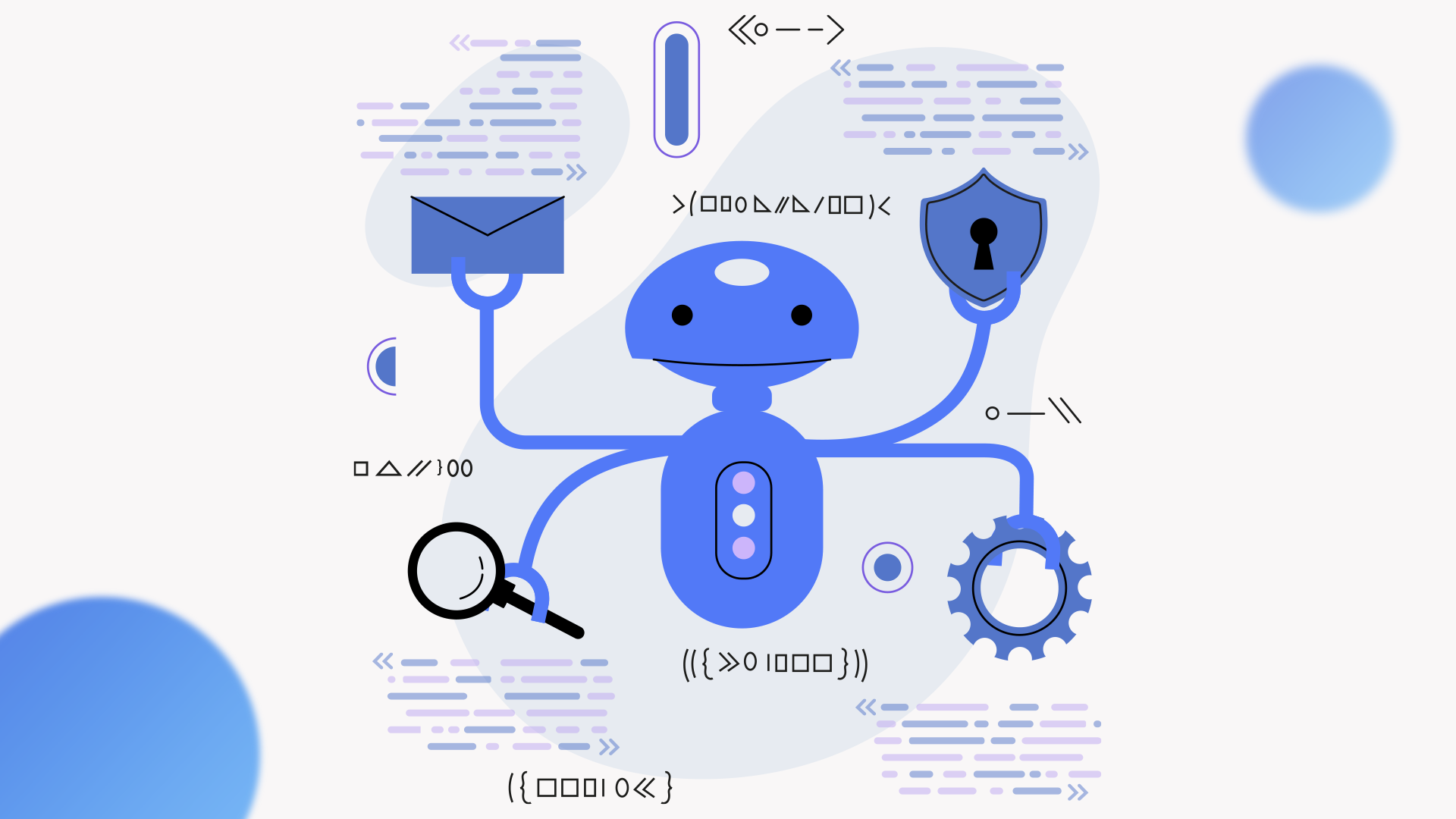
AI coding assistants started out as suggestion engines, offering a line or a function for a developer to accept or reject. That role has shifted quickly. Autonomous coding agents can now plan a task, write the code, run the tests, modify files across a codebase, and in some setups, deploy the result, all with limited human involvement at each individual step. The shift is not just a matter of degree. It changes who, or what, is actually making decisions at each point in the delivery pipeline.
This creates a genuinely new security challenge. An agent with access to development and deployment systems can make changes at a speed and scale that traditional review processes were never designed to keep up with. A human reviewer catching a mistake in a single pull request is a very different situation from an agent that can touch dozens of files, trigger a deployment, and move on to the next task before anyone has looked closely at what changed. This is the gap that guardrails for autonomous coding pipelines are designed to address.
AI agent guardrails in CI/CD are the controls that define what autonomous agents can access, what they can change, and what they can deploy. The goal is not to stop autonomous agents from working. It is to give them a clearly defined paved path, with boundaries and automated checks built into that path, so speed and safety are not competing against each other.
What Are AI Agent Guardrails in CI/CD?
Guardrails, in the context of autonomous coding and software delivery, are the technical and procedural controls that constrain what an agent is allowed to do, independent of what the agent itself decides is a good idea. This is a meaningfully different concept from conventional CI/CD security checks, which mostly assume a human is driving and simply verify the result of that human’s work before it ships. A pipeline built only around after-the-fact verification has no answer for an agent that can act faster than that verification step can meaningfully keep pace with.
A secure agentic pipeline needs to answer three basic questions clearly enough that the answer can be enforced automatically: what can the agent access, what can the agent change, and what can the agent deploy. If any of these three questions cannot be answered precisely for a given agent, that agent effectively has undefined permissions, regardless of what its instructions say.
Guardrails vs. Traditional Code Review
Human review traditionally happens after an agent, or a developer, has already produced a set of changes. Guardrails work differently. They constrain the agent’s actions while the work is actually being performed, rather than only catching problems in the finished output. Both are still needed. Review catches issues that automated checks were not designed to catch, and guardrails prevent an agent from taking an action that review would never even get the chance to see.
The Paved Path Concept
A paved path is an approved route through development, testing, and deployment, built from approved repositories, approved dependencies, approved environments, approved deployment methods, and defined testing requirements. The goal is to make the safe route the easiest route for the agent to follow, since an agent, much like a human developer, will generally take the path that requires the least friction to complete its task. Strong guardrails design starts by making that paved path genuinely convenient, not just technically available.
Not Sure What Your Coding Agents Actually Have Access To Right Now?
Most teams introduce agents faster than they define what those agents are actually allowed to touch.
Why Autonomous Coding Changes CI/CD Security
Autonomous coding agents change the security model because they can modify multiple files, run commands, chain actions, and trigger downstream workflows within a single task. They can also act faster than humans can review every intermediate decision.
That makes traditional after-the-fact review insufficient on its own. The pipeline needs controls that restrict what the agent can access and change while the work is happening, alongside independent checks before anything reaches production.
The Core Guardrails for Autonomous Coding Pipelines
This is the practical core of the article, covering the specific controls that make AI agent guardrails for CI/CD implementations effective in practice rather than just in policy documents. Each of the five areas below addresses a different part of what an agent can reach, and together they form a layered defense rather than relying on any single control to catch everything.
Identity and Least-Privilege Access
Each agent should be given only the permissions required for its specific task, with development, testing, staging, and production access kept clearly separated. Credentials should be short-lived and scoped to the task wherever possible.
Agents should not have unnecessary production secrets in their runtime environment, and network access should be restricted to the systems required for the task. Logs and agent traces should also redact credentials, tokens, and other sensitive information. This limits both accidental exposure and the damage an attacker can cause if an agent’s context, tool access, or execution environment is compromised.
Repository and Branch Restrictions
Limiting which repositories an agent can access, restricting protected branches, and requiring approved pull-request workflows for sensitive changes keeps an agent’s blast radius contained even when its task legitimately requires broad code access. A repository the agent has never been granted access to simply cannot be touched, regardless of what instruction it receives.
Protect the Controls That Approve Agent Changes
An agent should not be able to modify the controls used to validate or approve its own work. Protect CI/CD workflows, branch-protection rules, security configurations, agent instruction files, and security-critical tests from autonomous modification without independent review.
Changes that delete tests, weaken assertions, alter approval logic, or reduce deployment restrictions should trigger a separate review path. OWASP recommends independent verification and human review for security-critical changes made with AI coding tools.
The agent that writes a change should not be able to weaken the checks, approve the result, and deploy it using the same identity or privilege set. Keep approval and deployment authority outside the agent’s control, and run critical verification independently of the agent’s own execution environment.
Tool and Command Restrictions
Controlling which tools an agent can invoke, restricting high-risk shell commands and system operations, and preventing agents from bypassing established pipeline controls closes off a common path for unintended or unauthorized actions. Without this layer, an agent that has legitimate access to run tests can, in principle, also reach far more powerful commands it was never meant to use for that task.
Environment Isolation
Keeping agent activity isolated from production systems, using disposable or controlled environments for experimentation, and restricting network access where appropriate limits how far a mistake, or a manipulated instruction, can actually travel. A disposable environment that resets after each task also removes any incentive to leave lingering credentials or configuration behind for convenience.
Dependency and Package Controls
Allowing only approved package sources where possible, scanning new dependencies before they enter the build, and flagging unexpected changes to dependencies or lockfiles prevents an agent from quietly introducing a compromised or unreviewed package into the codebase.
Want Help Defining Least-Privilege Access for Your Coding Agents?
We can help you map exactly what each agent in your pipeline needs, and restrict everything else.
Building Security Into the Autonomous Coding Pipeline
Autonomous coding pipeline security works best as a layered approach applied at every stage of the pipeline, rather than a single final security scan run right before deployment. Treating autonomous coding pipeline security as a one-time setup, rather than an ongoing discipline, is one of the more common reasons guardrails erode over time as pipelines evolve.
- Before Code Generation: Define permissions, approved repositories, tools, dependencies, environments, and task boundaries.
- During Code Generation: Monitor tool calls and agent actions while restricting access to sensitive files and systems.
- Before Merge: Run tests, static analysis, and security scans, flag security-critical changes, and route high-risk changes through independent review.
- Before Deployment: Validate deployment targets, infrastructure, and configuration changes, with stronger controls for production.
- After Deployment: Monitor behavior and deployment changes, with tested recovery procedures for failures.
What a Guarded Agentic Deployment Looks Like
Consider an agent asked to fix a payment-service bug.
1. The agent proposes the change.
It can modify application code and run tests in an isolated development environment, but it cannot access production credentials or deployment systems.
2. The agent runs its checks.
Tests, static analysis and security checks run against the proposed changes. If the agent modifies security-critical tests or CI/CD configuration, the change is automatically flagged for additional review.
3. The pull request reaches a protected gate.
Branch protection prevents the agent from approving or merging its own change. An independent CI pipeline reruns the required checks rather than relying solely on the agent’s results.
4. Human approval is required for high-impact changes.
A reviewer sees the complete diff, including test, workflow and configuration changes, before approving the merge.
5. Deployment remains separately controlled.
The agent cannot use the same identity to approve the change and deploy it. Production deployment requires the appropriate independent permission and release gate.
6. The deployment is monitored.
Application behavior, deployment events and relevant security signals are monitored after release, with tested recovery procedures if the change causes problems.
The important boundary is simple: the agent can participate in the delivery process without owning the controls that decide whether its own work is trusted.
Agentic Deployment Safety: Controlling What Reaches Production
Agentic deployment safety focuses specifically on the transition from autonomous coding to autonomous release, which is where the consequences of a mistake become hardest to undo. Most of the discipline described elsewhere in this article exists to support agentic deployment safety at this final, highest-stakes stage.
Not Every Change Should Be Automatically Deployable
Classify changes by their potential impact, not simply by the type of file an agent modifies. A documentation change may be low risk, while a change to a test, CI workflow, deployment configuration, authentication logic, or security control can materially change what reaches production.
| Risk | Examples | Suggested Control |
|---|---|---|
| Low | Documentation or non-functional changes | Automated checks |
| Moderate | Application logic or dependency changes | Tests + security checks |
| High | Security-critical tests, authentication/payment logic, CI/CD workflow changes | Human approval + independent verification |
| Critical | Production access, deployment controls, infrastructure or security-policy changes | Restricted agent access + explicit approval |
Use Progressive Deployment
Starting in controlled environments, using staging before production, considering canary or gradual releases for suitable applications, and monitoring before expanding deployment all reduce how much damage a single bad change can cause before anyone notices.
Build in Rollback
Design reversible deployments where possible, and establish tested recovery procedures for changes that cannot be safely rolled back.
Preventing Prompt Injection and Unsafe Agent Behavior
An autonomous coding agent can encounter untrusted instructions in repositories, issues, documentation, dependencies, or other inputs it reads as part of its normal work. Agent security is therefore not only about protecting the agent from external attackers directly. It is also about preventing untrusted content the agent encounters from influencing privileged actions it is capable of taking. This distinction matters because the attacker in this scenario rarely interacts with the agent directly. They simply plant an instruction somewhere the agent is likely to read it during a routine task.
Treat Repository Content as Untrusted Input
README files, comments, issues, and other generated content can contain instructions, whether placed there deliberately or accidentally. Retrieved content should never be automatically treated as a trusted command simply because an agent encountered it while doing its job.
Separate Instructions From Permissions
An agent being told to perform an action should never automatically give it permission to perform that action. Permissions need to be enforced outside the model itself, at the level of the pipeline and infrastructure, so a manipulated or mistaken instruction cannot grant access it was never supposed to have.
Require Approval for Sensitive Actions
Production deployments, credential changes, infrastructure modifications, and security-policy changes should all require explicit approval regardless of how routine the underlying task seemed when the agent was given it. Treating these categories as always requiring a human in the loop, with no exceptions carved out for convenience, is what keeps the approval requirement meaningful rather than something that quietly erodes over time.
Observability and Audit Trails for AI Agents
Autonomous systems need stronger visibility into what they did and why, since the usual assumption that a human can explain their own reasoning does not transfer cleanly to an agent acting on its own. Capturing agent actions as part of the standard CI/CD audit trail closes this gap.
What to Log
Agent identity, the task or trigger that initiated the action, files changed, commands or tools used, tests performed, deployment actions, and any approvals or overrides all need to be captured consistently, so an incident can actually be reconstructed after the fact rather than pieced together from guesswork.
Detecting Anomalous Behavior
Unexpected repository access, unusual command execution, large or unrelated code changes, attempts to access restricted environments, and unexpected deployment activity are all signals worth monitoring for automatically, since they tend to appear well before a genuine incident becomes obvious through other means.
Conclusion
Autonomous coding agents are changing the role of CI/CD from simply moving code through environments to actively governing machine-driven changes at a pace no human reviewer can fully keep up with alone. These controls provide the boundaries needed to make that autonomy genuinely manageable, rather than something a team is quietly hoping works out.
Effective autonomous coding pipeline security combines least privilege, environment isolation, automated checks, observability, and human approval at the right points, applied consistently rather than as a one-time setup. Agentic deployment safety ultimately comes from making the approved path clear, enforceable, and recoverable, so the speed autonomous agents offer never comes at the cost of a team’s ability to control what actually reaches production.
Ready to Introduce AI Agents Without Giving Up Control?
Build a CI/CD environment where autonomous coding agents can move quickly while operating within defined security and deployment boundaries.
Talk to Our Engineering Team About Secure, Agent-Ready CI/CD Pipelines →
Frequently Asked Questions
1. Do guardrails slow down what autonomous coding agents can accomplish?
Well-designed guardrails add minimal friction for routine, low-risk changes, since those checks run automatically alongside the agent’s work rather than pausing it. The friction is intentionally concentrated on high-risk actions, such as production deployments or credential changes, where a brief pause for approval is a reasonable tradeoff for the risk involved. Teams that measure this in practice tend to find the slowdown is barely noticeable next to the time saved by not manually reviewing every routine change.
2. How is agent access different from the access a human developer typically has?
A human developer’s access is usually broad but constrained by the time and attention it takes to misuse it. An agent can act on whatever access it has been given at a speed and scale a human simply cannot match, which is why least-privilege access matters even more for agents than it has traditionally mattered for human accounts. A single overly broad grant that would take a person weeks to misuse could be exhausted by an agent in a single task.
3. Can guardrails fully prevent prompt injection attacks against a coding agent?
No single control fully eliminates the risk, but separating instructions from permissions significantly limits the potential impact of prompt injection, particularly when combined with sandboxing, restricted tool access and monitoring.
4. Should every organization allow coding agents to deploy directly to production?
Not necessarily, and many organizations start without direct production deployment access at all. A staged approach, where agents earn broader deployment permissions gradually as they demonstrate reliability in lower-risk environments, tends to be safer than granting full deployment access from day one. This staged path also gives a team a natural checkpoint to reassess before extending any new permission further.
5. What is the first guardrail a team should implement if they are just starting to use coding agents?
Least-privilege identity and access control is generally the highest-leverage starting point, since it limits the damage from nearly every other kind of mistake or manipulation before more specific controls are even in place. Most other guardrails become considerably easier to reason about once agent identity and access are clearly defined. Once that foundation exists, adding environment isolation, tool restrictions, and audit logging tends to be a much more straightforward next step.