
Supply Chain Complexity Needs Logistics Software Built for It
The global logistics market is projected to reach $16.79 trillion by 2030 (Grand View Research, 2024), with 79% of supply chain leaders investing in digital platforms to manage rising operational complexity (Gartner, 2024). Behind every supply chain that runs without gaps is a logistics software development services partner that understands TMS, WMS, FMS, EDI integration, and the reality of fleets, warehouses, and last-mile delivery. Ariel builds custom logistics software across fleet management, warehouse operations, route optimisation, and compliance, one engineering team that knows logistics from the ground up.
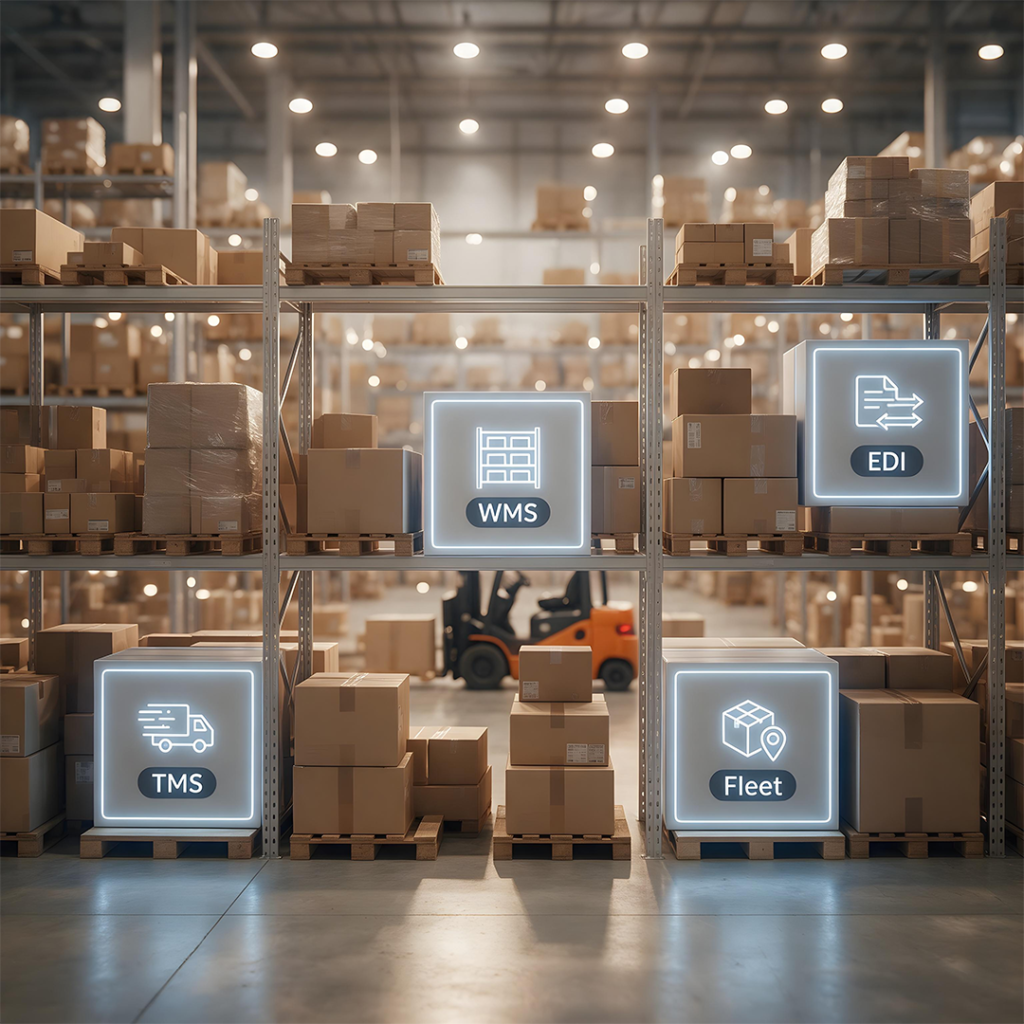
The Logistics Trends Our Software Development Services Keep Up With
01
Real-Time Visibility Is Now Expected.
Trend: 81% of shippers say real-time supply chain visibility is now a critical requirement (MHI Annual Industry Report, 2024) but only 23% of logistics operators have full end-to-end visibility today.
Ariel’s Position: Real-time tracking platforms with GPS integration, IoT telematics, EDI connectivity, and live shipment dashboards giving logistics teams complete supply chain visibility from origin to delivery.
02
Last Mile Is Still the Biggest Challenge
Trend: Last mile delivery accounts for 53% of total shipping costs (Capgemini Research Institute, 2024) and has the highest rate of failed deliveries, costing the industry $1.4 billion annually.
Ariel’s Position: Last mile delivery software with driver mobile apps, electronic proof of delivery, dynamic re-routing, real-time customer notifications, and failed delivery management workflows built in.
03
AI Route Optimisation Cuts Costs
Trend: AI-driven route optimization reduces fleet mileage by 15-20% and fuel costs by 10-15% on average (McKinsey Global Logistics Report, 2024), but most logistics operators still rely on static scheduling.
Ariel’s Position: Dynamic route optimization engines factoring real-time traffic, vehicle capacity, delivery windows, driver availability, and live re-routing, replacing manual planning with AI-driven decisions.
04
Warehouse Automation Is Accelerating
Trend: WMS and warehouse automation investments grew 31% year-over-year (Forrester WMS Wave, 2024) as labour shortages and fulfilment speed expectations drive WMS modernisation.
Ariel’s Position: Warehouse Management Systems with barcode and RFID integration, picking workflow optimisation, putaway logic, cycle count automation, and fulfilment analytics across multi-facility operations.
05
Compliance Complexity Is Rising
Trend: Customs documentation, driver hours regulations, dangerous goods handling, and ESG reporting requirements have grown across 40+ jurisdictions in the last three years (WCO Compliance Monitor, 2024).
Ariel’s Position: Logistics compliance management with automated customs documentation, driver hours tracking, vehicle inspection records, dangerous goods handling, and regulatory reporting built in from the architecture stage.
Logistics Software Development Services. 16+ Years. Zero Compromises
Logistics Software Development Services From Fleet to Last Mile
Fleet Management Systems (FMS)
- Real-time GPS tracking and IoT telematics integration
- Driver behaviour monitoring and safety scoring
- Vehicle maintenance scheduling and diagnostics
- Fuel management and consumption analytics
- Fleet performance dashboards and KPI tracking
Warehouse Management Systems (WMS)
- Barcode and RFID-driven inventory tracking
- Picking, putaway, and cycle count workflow optimisation
- Multi-facility inventory sync and visibility
- Fulfilment analytics and labour productivity tracking
- Integration with ERP, OMS, and shipping systems
Transportation Management Systems (TMS)
- AI-driven dynamic route optimisation
- Real-time traffic and weather integration
- Carrier rate shopping and freight audit automation
- Multi-modal shipment planning (road, rail, ocean, air)
- Load consolidation and capacity utilisation analytics
Last Mile Delivery Platforms
- Driver mobile apps with offline functionality
- Electronic proof of delivery and digital signatures
- Real-time customer notifications and ETA updates
- Failed delivery management and retry workflows
- Last mile analytics and route performance reporting
Supply Chain Visibility and Tracking
- End-to-end shipment tracking across carriers
- EDI integration with shippers and 3PLs
- Live exception management and alerting
- Multi-carrier API integration (FedEx, UPS, DHL, Maersk)
- Customer-facing tracking portals and notifications
Logistics Compliance and Documentation
- Automated customs documentation and clearance
- Driver hours of service tracking (HOS, ELD compliance)
- Vehicle inspection records and DOT compliance
- Dangerous goods handling and IMDG/IATA documentation
- ESG reporting and emissions tracking
Comprehensive Solutions for the Logistics Industry
Our expertise lies in delivering versatile, scalable software solutions that address the diverse needs of the logistics sector.
- Automation Tools
- Custom Platforms
- Integration Services
- Advanced Analytics
- Cloud-Based Solutions

Logistics Solutions & Projects
Is Your Supply Chain Running on the Right Software?
Our Development Process
Technology Stack






Logistics Solutions Answered
What logistics software development services does Ariel build for logistics businesses?
Ariel builds logistics software development services covering Fleet Management Systems (FMS), Warehouse Management Systems (WMS), Transportation Management Systems (TMS), route optimisation engines, last mile delivery platforms, supply chain visibility tools, and logistics compliance platforms. Every platform is built around your specific operational workflows, EDI integration needs, and supply chain data structure from the architecture stage.
Does Ariel integrate logistics software development services with EDI, carrier APIs, and 3PL platforms?
How does custom logistics software development handle real-time fleet visibility?
Custom logistics software development for fleet visibility requires real-time GPS integration, IoT telematics processing, driver behaviour monitoring, and live dashboard architecture built to handle high-frequency data updates. Ariel builds fleet management systems that give logistics teams accurate real-time visibility across every vehicle in their fleet, typically delivering 70% faster query response times across 10,000+ daily vehicle movements.
What warehouse management capabilities does Ariel deliver in logistics software development services?
Ariel’s logistics software development services for warehouse management cover barcode and RFID-driven inventory tracking, picking workflow optimisation, putaway logic, cycle count automation, multi-facility inventory sync, fulfilment analytics, and integration with ERP and OMS platforms. Every WMS is built around your specific facility layout and fulfilment workflows.
How does a logistics software development company approach AI route optimisation?
A logistics software development company building AI route optimization accounts for real-time traffic, vehicle capacity, delivery time windows, driver availability, fuel costs, and dynamic re-routing when conditions change. Ariel builds route optimisation engines that typically reduce fleet mileage by 15-20% and improve on-time delivery rates while adapting to operational changes in real time.
Does Ariel build last mile delivery platforms as part of logistics software development services?
Yes. Ariel’s logistics software development services for last mile delivery cover driver mobile apps with offline functionality, electronic proof of delivery, real-time customer notifications, ETA updates, failed delivery management workflows, and last mile analytics. Every last mile platform is built around the specific operational complexity of your delivery network.
How does custom logistics software development handle compliance and regulatory requirements?
Custom logistics software development at Ariel covers ELD and HOS driver hours compliance, DOT vehicle inspection records, customs documentation automation, dangerous goods handling (IMDG, IATA), and ESG reporting. Compliance is built into every logistics platform from the architecture stage so audit trails, documentation workflows, and regulatory reports are generated automatically across every jurisdiction.
Can Ariel integrate logistics software development services with existing ERP, TMS, and WMS systems?
Yes. Ariel’s logistics software development services include full integration with existing ERP platforms (SAP, Oracle, NetSuite, Microsoft Dynamics), TMS, WMS, OMS systems, carrier APIs, customs documentation systems, and third-party logistics providers. Every integration is mapped and validated against real operational data flows before go-live.
How does Ariel approach data security in logistics software development services?
Data security in Ariel’s logistics software development services covers encrypted data transmission for fleet telematics, role-based access controls for drivers, dispatchers, and managers, audit trail logging for every operational event, GDPR alignment, and compliance with data protection regulations across every jurisdiction your logistics operation covers. Security requirements are confirmed at the architecture stage.